
The balance of stress
How does stress come about? As the following clip shows, it has to do with your
DEMANDS and RESOURCES.
Now think about the stress in your life. Thinking about the clip you have just watched, ask yourself:
- What are your DEMANDS? What kinds of things can cause you stress?
- What are your RESOURCES? Which ways of coping do you tend to rely on?
- What happens when your DEMANDS outweigh your RESOURCES?
Remember that some ways of coping can end up causing more stress.
Facilitator notes
Often, focusing on stress is an easier way for parents to talk about what is happening in their relationship, and to introduce coping strategies.
Discuss the couple’s current sources of stress and their coping resources. Recap on the questions:
- How often do they feel stressed? A couple of times a week? Every day? What kinds of things can cause you stress?
- Which ways of coping do you tend to rely on? What sort of things can you do and what support do you have that helps you to cope?
- What happens when you feel overwhelmed by stress?
How stress comes about
Stress isn’t the same for everyone. Something you find easy to cope with might be very stressful for your partner.
You might even cope better or worse depending on how you feel on the day. It all depends on YOU and your RESOURCES.
Watch the next clip
Facilitator notes
- Talk about how stress can be exacerbated by how we are feeling and the way we respond to it. This helps parents reframe some of their initial thoughts about the source of their stress.
Major events and daily hassles
We’ll be talking more about stress over the next few pages.
As you think about your own stress, try to notice whether it’s coming from BIG LIFE CHANGES or from DAILY HASSLES. It could be a mix of both.

Facilitator notes
This comic strip shows how daily hassles can build up if they aren’t addressed.
Ask the couple if they have been able to identify what adds to their stress on a daily basis. What are the big life changes they have experienced?
Emphasise how important it is to talk about the situation and to resolve it before it gets too big.
How stress affects you
Think about a recent time when you felt stressed. What was it like for you?
The effects of stress can include:
- Thoughts
- Feelings
- Actions
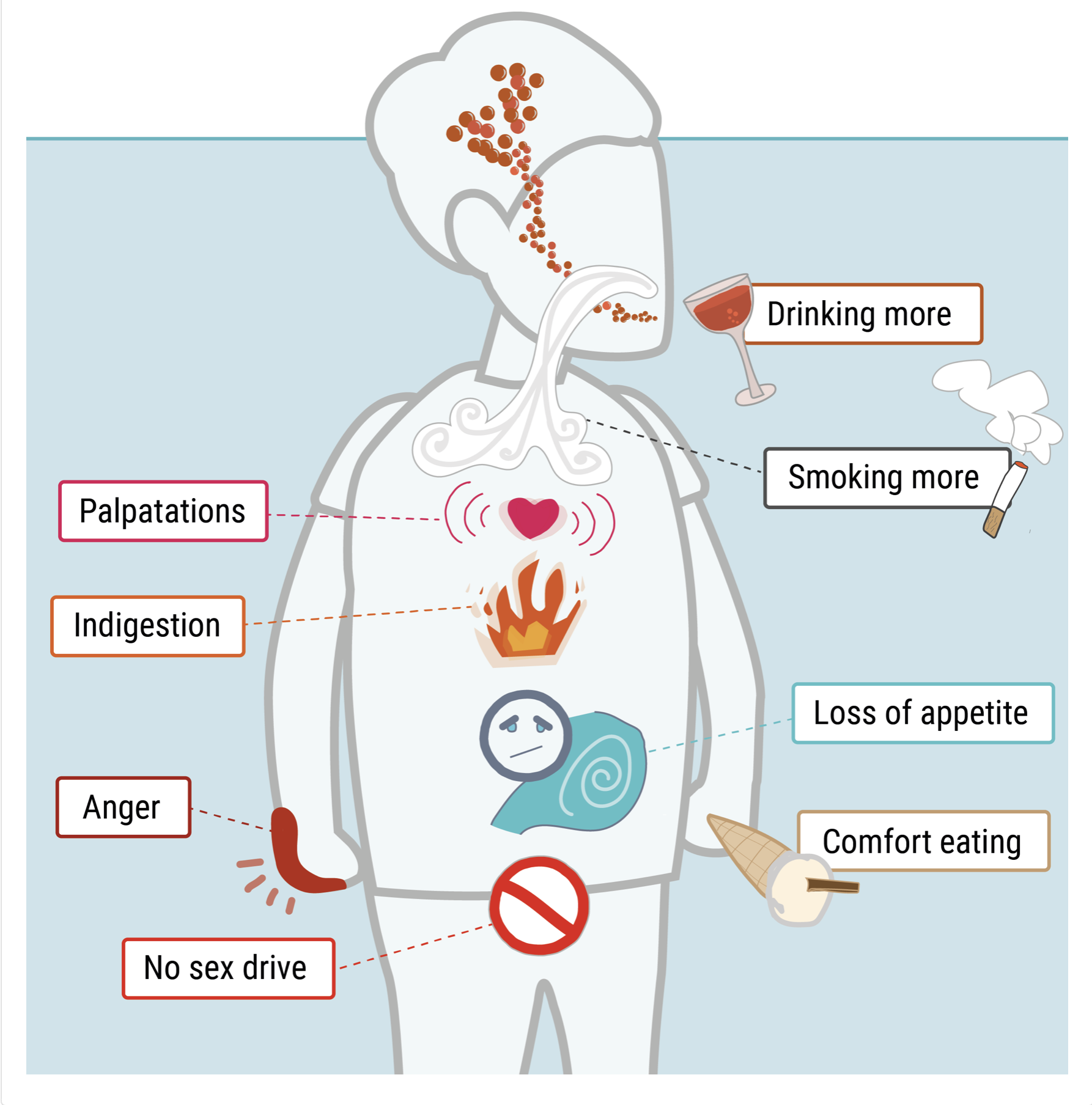
Sometimes, stress can lead to actions that may make us feel even worse – like avoiding our friends and family, arguing more with our partner, or smoking and drinking more.
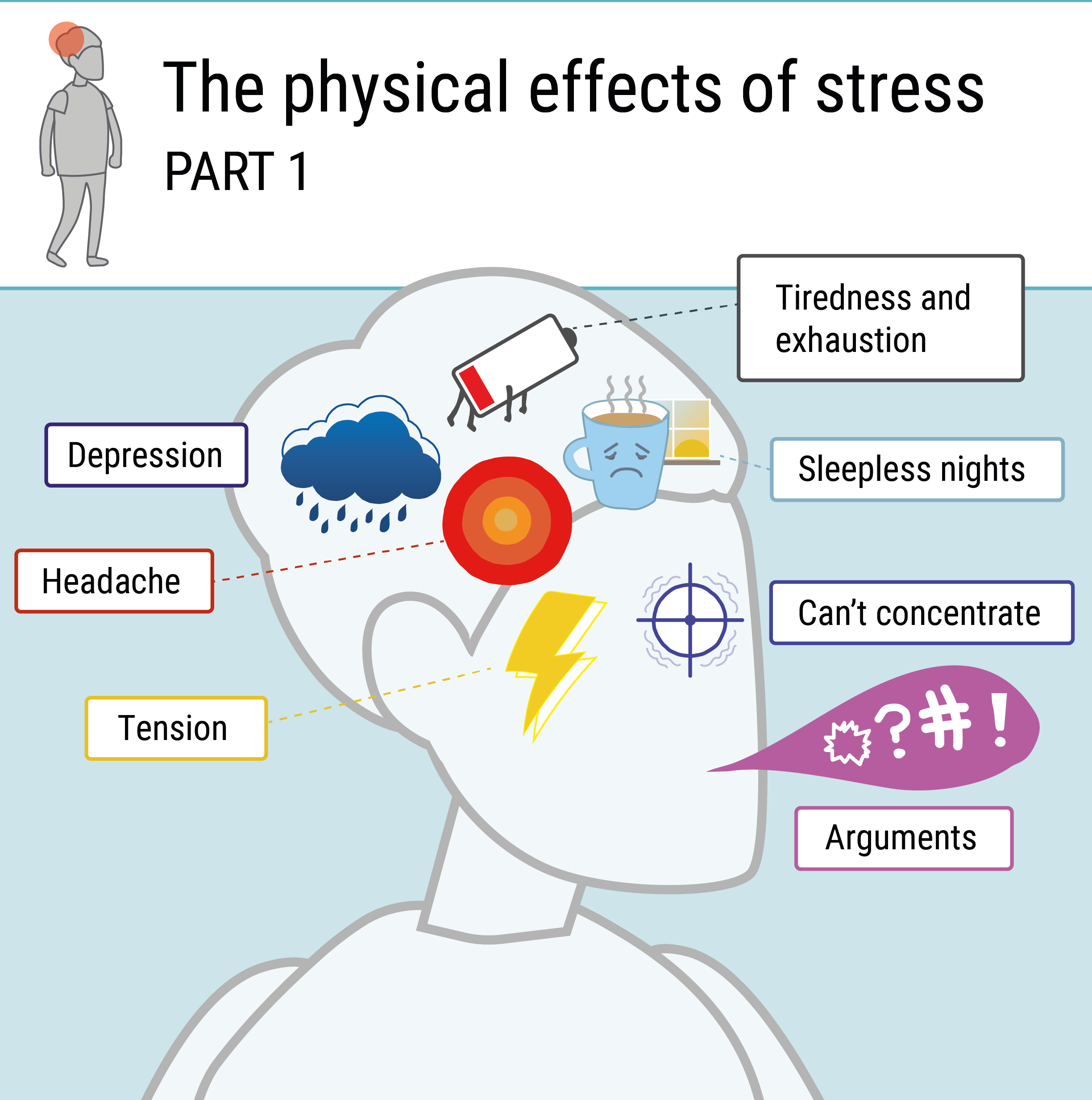
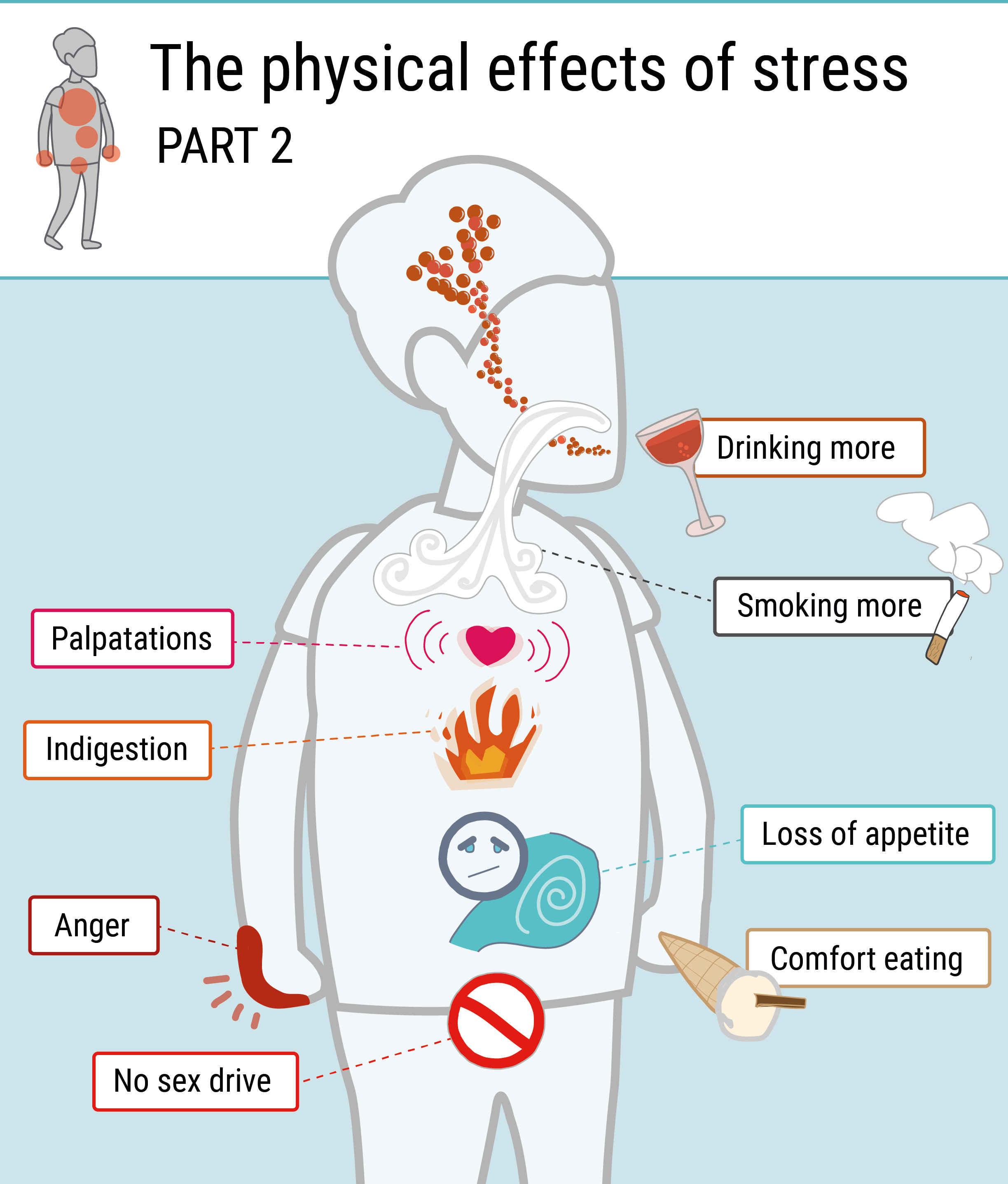
Have a look at the picture below, showing some of the PHYSICAL EFFECTS OF STRESS.
Learning to recognise these signs can make it easier to deal with stress when it comes up in the future.
You can think of it as your body giving you a signal that something in your life needs attention.
Facilitator notes
Facilitate a conversation using these two pictures. Ask the couple to identify how stress affects them. What are their symptoms and how does that make them feel?
Explain that stress can affect us physically and mentally. Anxiety, tension, irritability, and tiredness can all make us short-tempered, which is often why arguments erupt.
Learning to recognise these signs can make it easier to deal with stress.
Inside and outside stress
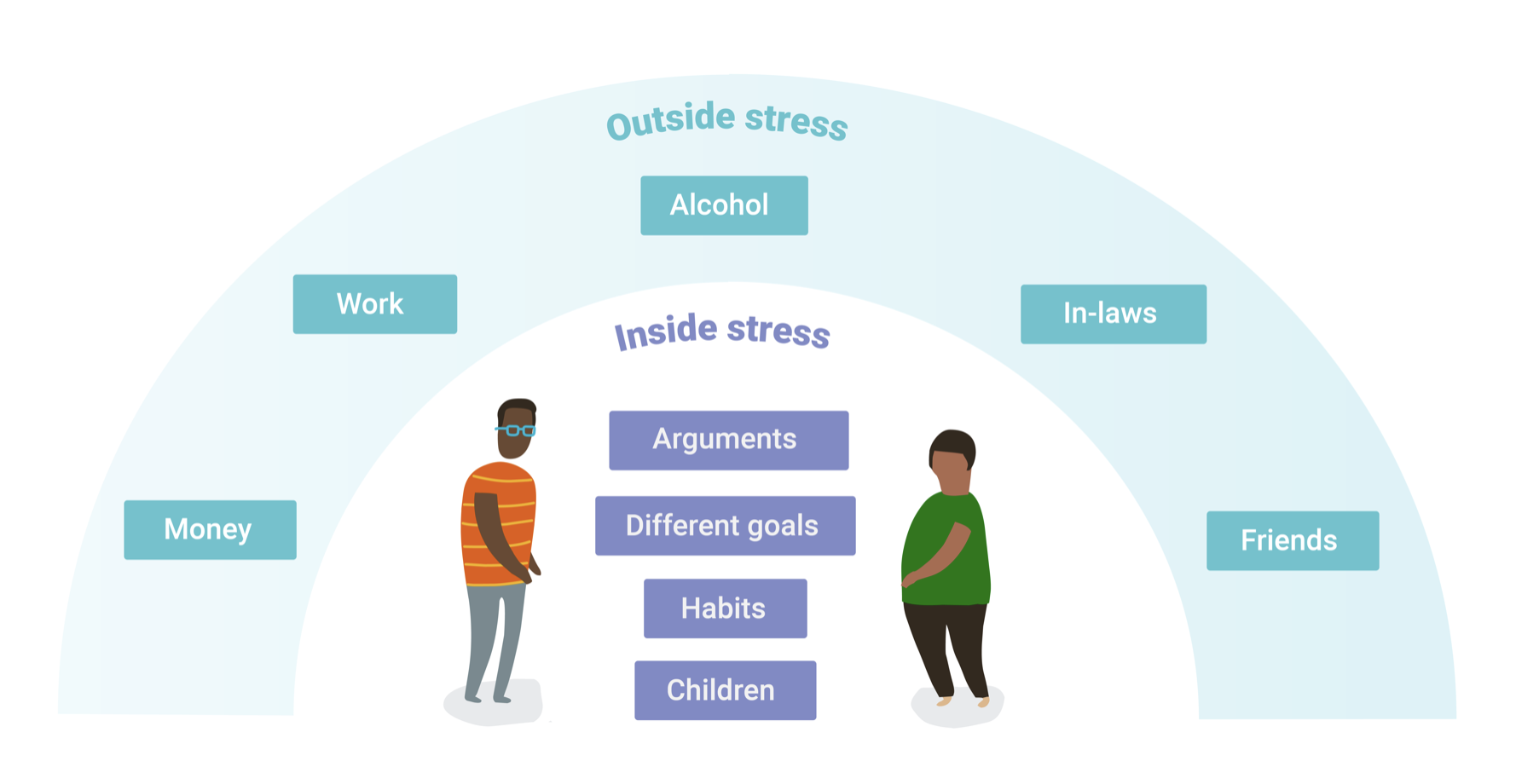
Sometimes stress will come from INSIDE your relationship, and sometimes it will come from OUTSIDE your relationship.
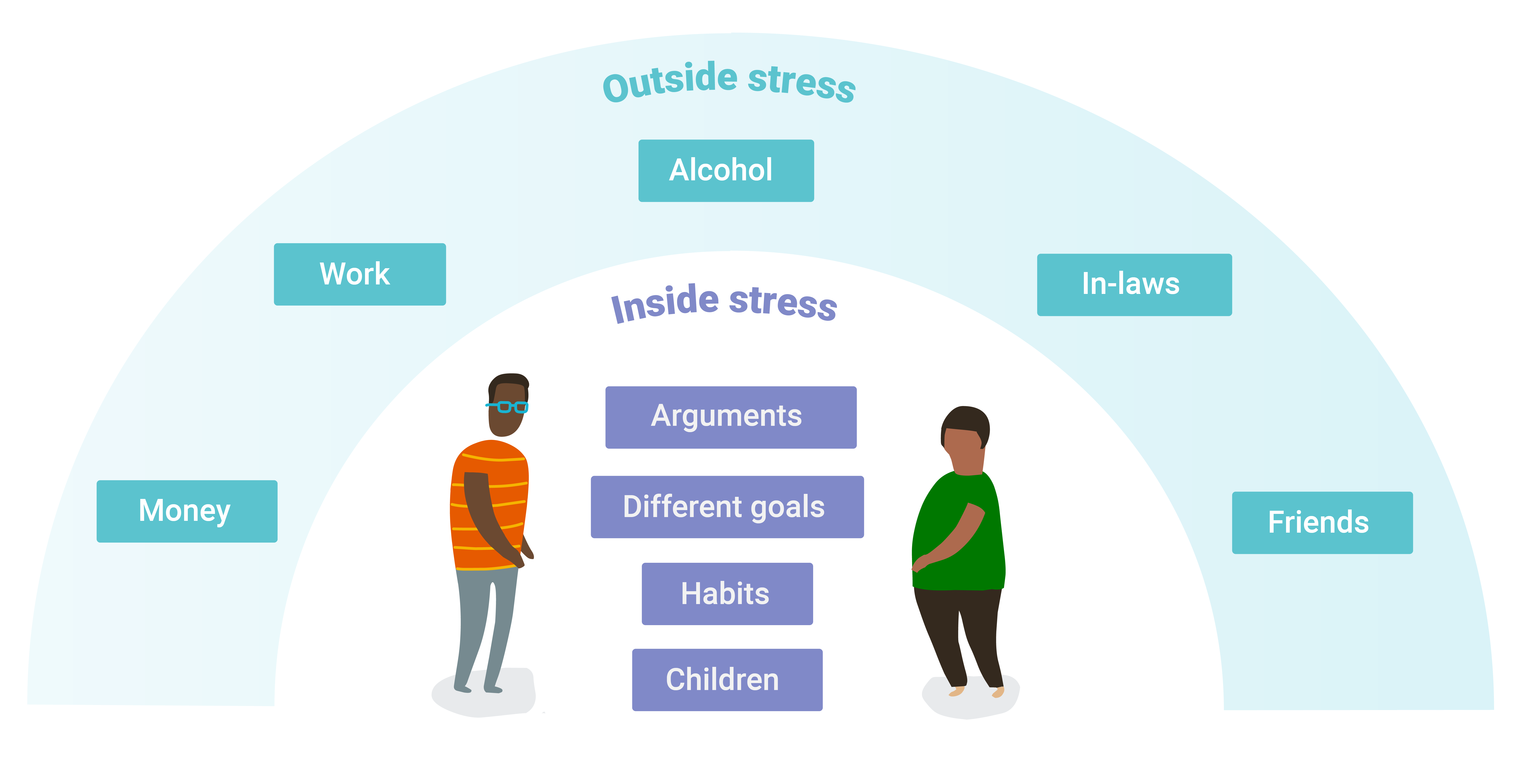
Inside stress
As a couple, and as parents, there will be stressful times when you need to support each other.
INSIDE STRESS is stress that is directly connected to your relationship with your partner. It might include arguments, having different goals, problems with your children, or anything else that affects you both.
Outside stress
OUTSIDE STRESS is stress that comes from outside your relationship. It might include stress with money, work, friends, in-laws, or anything else that’s affecting one of you.
It can seem like this doesn’t have anything to do with your relationship, but that isn’t always true. Sometimes, OUTSIDE STRESS can spill over into your relationship and become INSIDE STRESS.
Facilitator notes
Assess their understanding of how stress from outside their relationship – such as money or in-laws– can spill over into their relationship.
Stress and relationships
There are four main ways that OUTSIDE STRESS can spill over into your relationship:
- TIME: When you or your partner have a lot of stress in your life, you have less time for each other.
- COMMUNICATION: If you are stressed, you may argue more or snap at each other.
- HEALTH: Stress can be bad for your body. You may feel unwell and want to be alone. Stress can even make you less interested in sex.
- BEHAVIOUR: When you are stressed, you might behave in a way you wouldn’t normally. Stress can make you impatient or grumpy, and less willing to see things from your partner’s point of view.
Watch Darren’s story:
Facilitator notes
Stress spills over into the relationships in four main ways – time, communication, health, and behaviour. Have they been able to identify the ways stress spills over into their relationship?
Emphasise the main message from the video clip. Darren’s story shows how easy it is to rely on alcohol or other unhealthy ways of coping with stress. Can the couple talk about their stress with each other?
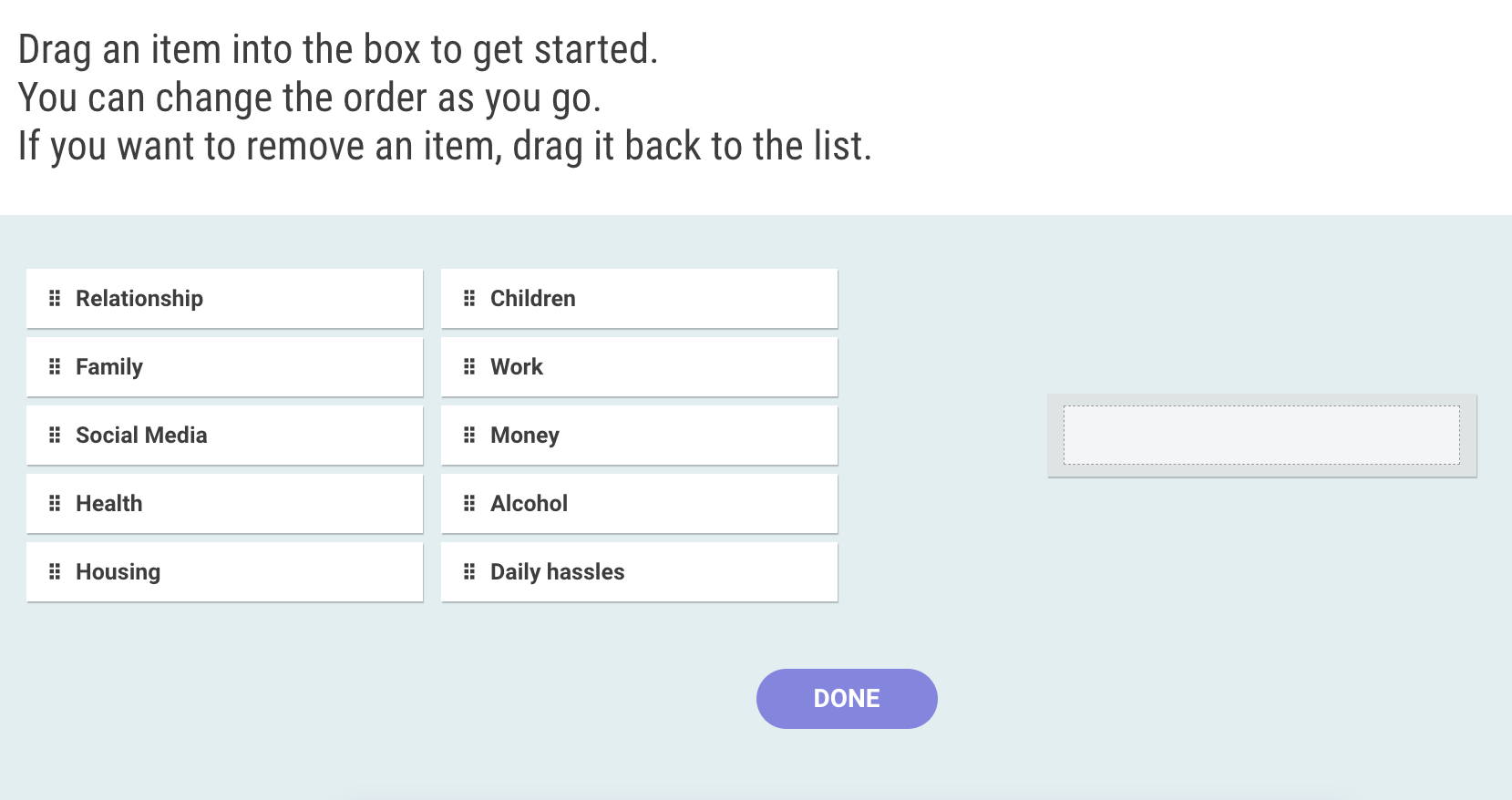
Where stress comes from
Please note that this is a screenshot from the parent resource. To use the interactives, you will need to go to the parent resource.
Facilitator notes
Ask the couple if they have identified where their stress comes from. If they have both done a stress target, are they the same or different? What does this mean to them and what they might do about it? Encourage the couple to reflect on how and why they become stressed.
End of section 1: Key messages
You’ve finished Section 1. Well done!
In the next section, you will learn more about how to cope with stress as a couple.
You have already learned a lot about stress. What key messages can you remember?
- Stress can affect you, your relationship, and your children.
- Stress happens when DEMANDS outweigh RESOURCES.

You may react differently to stress, depending on how you feel on the day.
- Stress from DAILY HASSLES can be just as hard to cope with as stress from MAJOR EVENTS.

- Stress can affect you through your THOUGHTS, FEELINGS, and ACTIONS.
- Stress can come from INSIDE or OUTSIDE your relationship.
- Stress from outside can spill over into your relationship.
- Some ways of coping can make stress worse, not better.
How might you and your partner use these lessons in your lives? What do you think could change if you do?
This might be a good time to take a break and think about what you've learned so far.
When you're ready, come back and get ready for Section 2.
Facilitator notes
Recap on what the couple have learned so far. Emphasise the key messages of this section:
- Stress can affect you, your relationship, and your children.
- Stress happens when DEMANDS outweigh RESOURCES.
- You may react differently to stress, depending on how you feel on the day.
- Stress from DAILY HASSLES can be just as hard to cope with as stress from MAJOR EVENTS.
- Stress can affect you through your THOUGHTS, FEELINGS, and ACTIONS.
- Stress can come from INSIDE or OUTSIDE your relationship.
- Stress from outside can spill over into your relationship.
- Some ways of coping can make stress worse, not better.
